Why Tri-Proof Lights Turn Yellow and Crack
And What It’s Really Costing You
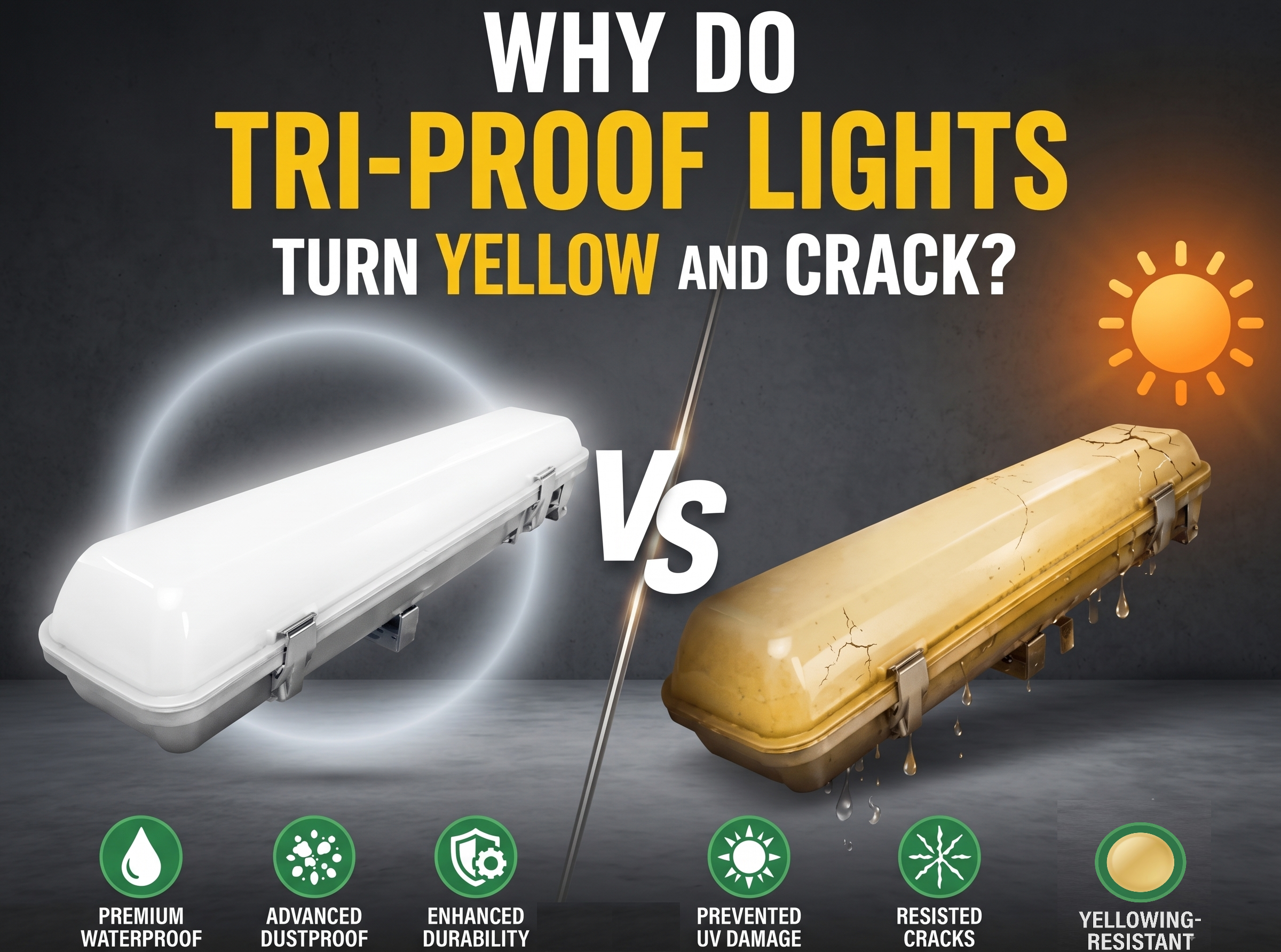
If you’ve ever looked up at a row of tri-proof lights and noticed that tell-tale amber tinge creeping across the diffusers, you’re not alone. Yellowing and cracking are among the most common complaints in industrial lighting — and in most cases, they’re entirely preventable.
The bad news? Cheap fixtures make this problem inevitable. The good news? Knowing why it happens means you can stop it before it hits your bottom line.
The Hidden Enemy: Material Quality
Most tri-proof light failures start with one decision made at the factory: the grade of polycarbonate used to manufacture the housing and diffuser.
Low-grade or recycled polycarbonate may look identical to high-grade virgin PC on day one. It’s only after months of exposure to UV radiation, heat cycles, and humidity that the difference becomes visible — and costly.
Without sufficient UV stabilisers built into the material, polycarbonate absorbs ultraviolet radiation rather than deflecting it. Over time, the molecular structure of the plastic breaks down. Transparency fades. The diffuser takes on a yellow cast. Light transmittance drops — by up to 30% in severely degraded fixtures.
That means a facility that installed 100 fixtures is effectively operating with the output of 70. More labour. More energy. Darker, less safe working environments.
|
Key Stat: Up to 30% reduction in light output Severe yellowing can cut light transmittance by nearly a third — forcing facilities to run additional fixtures and increase energy costs. |
Three Root Causes of Premature Failure
1. Low-Grade Polycarbonate Without UV Protection
Recycled PC is cheaper to produce and frequently used to cut costs in budget fixtures. The problem is that recycled material lacks the consistent UV stabiliser content found in virgin polycarbonate. Yellowing can begin in less than 12 months under regular UV exposure — well before any reasonable return on investment.
2. Insufficient Impact Resistance
Industrial environments are tough on everything. Forklifts, maintenance carts, falling tools, and the general chaos of a working facility all find their way into contact with overhead lighting. Fixtures without an IK10 impact rating are far more vulnerable to cracking from even minor collisions. Once the housing cracks, moisture ingress becomes a real risk, accelerating internal failure and creating potential safety hazards.
3. Poor Manufacturing Design
Sometimes cracking isn’t caused by impact at all. Uneven wall thickness, poor moulding processes, and internal stress points built into the fixture during manufacturing mean that temperature fluctuations alone can trigger structural failure. This is a design and quality control issue — one that no amount of careful installation can fix after the fact.
How Failure Develops Over Time
Degradation rarely announces itself dramatically. It creeps.
First, slight discolouration appears on diffuser surfaces — easy to overlook during a routine inspection. Then, as oxidation progresses, yellowing becomes obvious and light output measurably drops. The now-brittle material becomes vulnerable to cracking from even minor stresses. Finally, what began as a material quality issue becomes a maintenance burden: more frequent inspections, reactive replacements, operational downtime, and staff hours diverted from productive work.
Facilities often don’t calculate the true cost of this cycle until they’re already deep in it.
Virgin PC vs Recycled PC: The Material That Makes the Difference
The distinction between high-grade virgin polycarbonate and recycled PC is the single most important factor in the long-term performance of any tri-proof fixture.

Virgin polycarbonate is manufactured with consistent UV stabilisers, maintains high light transmission over years of use, and resists both impact and thermal stress far more effectively. Fixtures built with it routinely deliver 5 or more additional years of reliable service life compared to budget alternatives.
Recycled polycarbonate offers a lower upfront purchase price. But when you factor in replacement cycles, labour, and the operational cost of reduced light output, the economics reverse quickly. A cheap fixture is often the most expensive choice you’ll make.
What to Look for When Specifying Tri-Proof Lights
Not all specifications tell the full story, but these are the non-negotiables worth asking about:
- UV-stabilised virgin polycarbonate for both housing and diffuser
- IK10 impact rating — the highest standard for resistance to mechanical impact
- IP65 or higher ingress protection to guard against moisture and dust
- Consistent wall thickness and quality-controlled moulding to eliminate internal stress points
- Verified certifications (TUV, UL, DLC, CE, RoHS) from a tested, audited manufacturer
The Real Cost of Getting It Wrong
Consider a warehouse running 200 tri-proof lights. If 30% of those fixtures start yellowing within two years, you’re looking at:
- A measurable drop in average lux levels across the facility
- Increased cleaning and inspection frequency as diffusers degrade
- Early replacement of fixtures that should have lasted a decade
- Labour and downtime costs every time a fixture is swapped out
The initial saving on a cheaper fixture rarely survives contact with these realities.
Choose Fixtures Built to Last
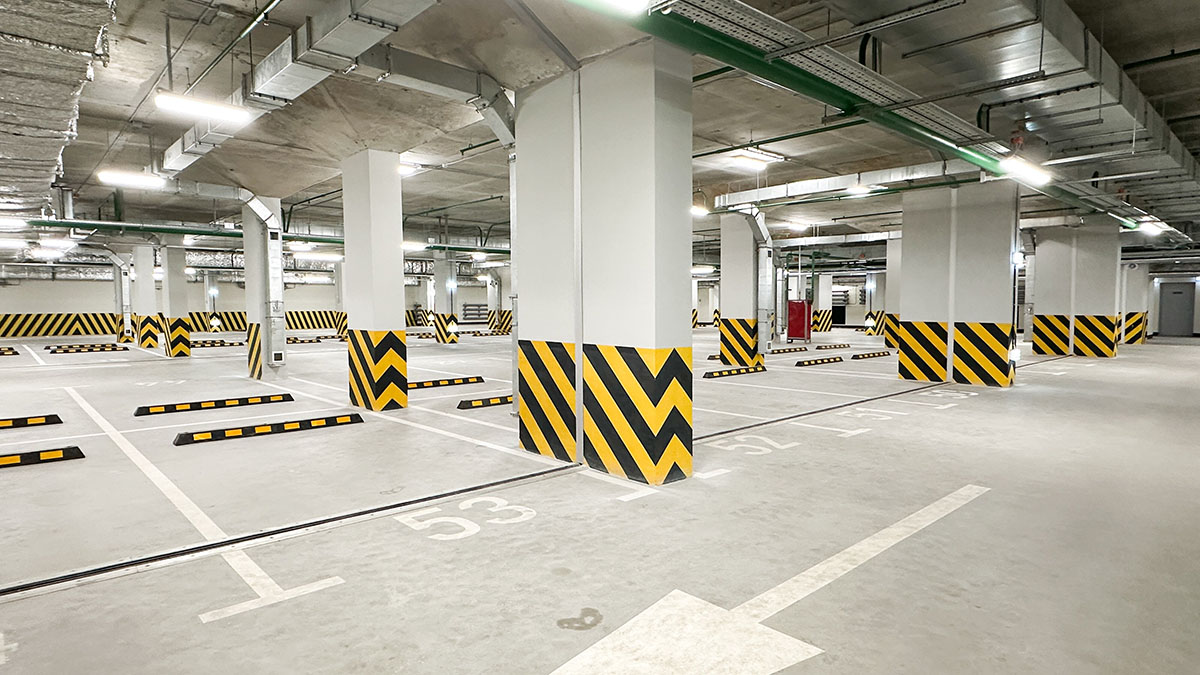
When you invest in tri-proof lighting for demanding environments — parking garages, food processing facilities, cold storage, chemical plants, car washes — the fixture you choose needs to be built for that environment from the inside out. That means the right material, the right design, and the right manufacturing standards.
At Greenlux Lighting, we supply tri-proof lights built with UV-stabilised virgin polycarbonate, IK10-rated housings, and fully certified quality processes. Our fixtures are designed to maintain performance over the long term — not just to pass an initial inspection.
Looking to upgrade your current lighting setup? Visit www.greenlux.com.au to explore our full range of tri-proof lights, including IP66 and IP69K-rated options for the most demanding industrial environments.
More from the knowledge Hub
The Science of Colour Rendering
At Greenlux, we believe that exceptional lighting goes beyond simple illumination.
Sustainable Lighting Solutions
At Greenlux we make all our decisions with sustainability, environmental health & economy in mind.
Energy Efficient Lighting Solutions
Energy efficiency is a major talking point when it comes to commercial building developments.
Green Star Lighting Compliance
The GBCA is the nation’s leading authority on sustainable buildings and communities.
Workplace Lighting Standards
Guides, regulations, and lighting standards relating to commercial office fit-outs in Australia.
Lighting in Harsh Environments
Why You Need to Know the IP69K – Being confident with the lighting product you choose.
Greenlux Lighting
We are your partners in compliant, sustainable Australian lighting.